The fun part is
building it well.

Brainless Brilliance is the name over the door for a handful of projects built out of curiosity — a game engine behind a trivia night, a globe tracking sixteen thousand satellites. All of it built like it mattered.

4 projects. 3 you can open right now.

Every one of these started as a question worth answering properly, and then got the real treatment: proper engines, proper plumbing, proper edge cases. Nobody asked for that. It's just the enjoyable part — and it's why they hold up rather than merely demo well.

Trivialism

live

Multiplayer trivia nights across web, mobile, and Discord — driven by one shared engine.

One C++ engine drives every surface — a Nuxt web app, a React Native app, and a Discord Embedded Activity — from a single source of truth. A quiz night plays identically in a browser, on a phone, or inside Discord, and your progression follows you across all three. One set of game rules, three very different runtimes, no drift between them.

  • C++ game engine
  • Nuxt 4
  • React Native
  • Discord Activity
  • C++ Discord bot
Play it live
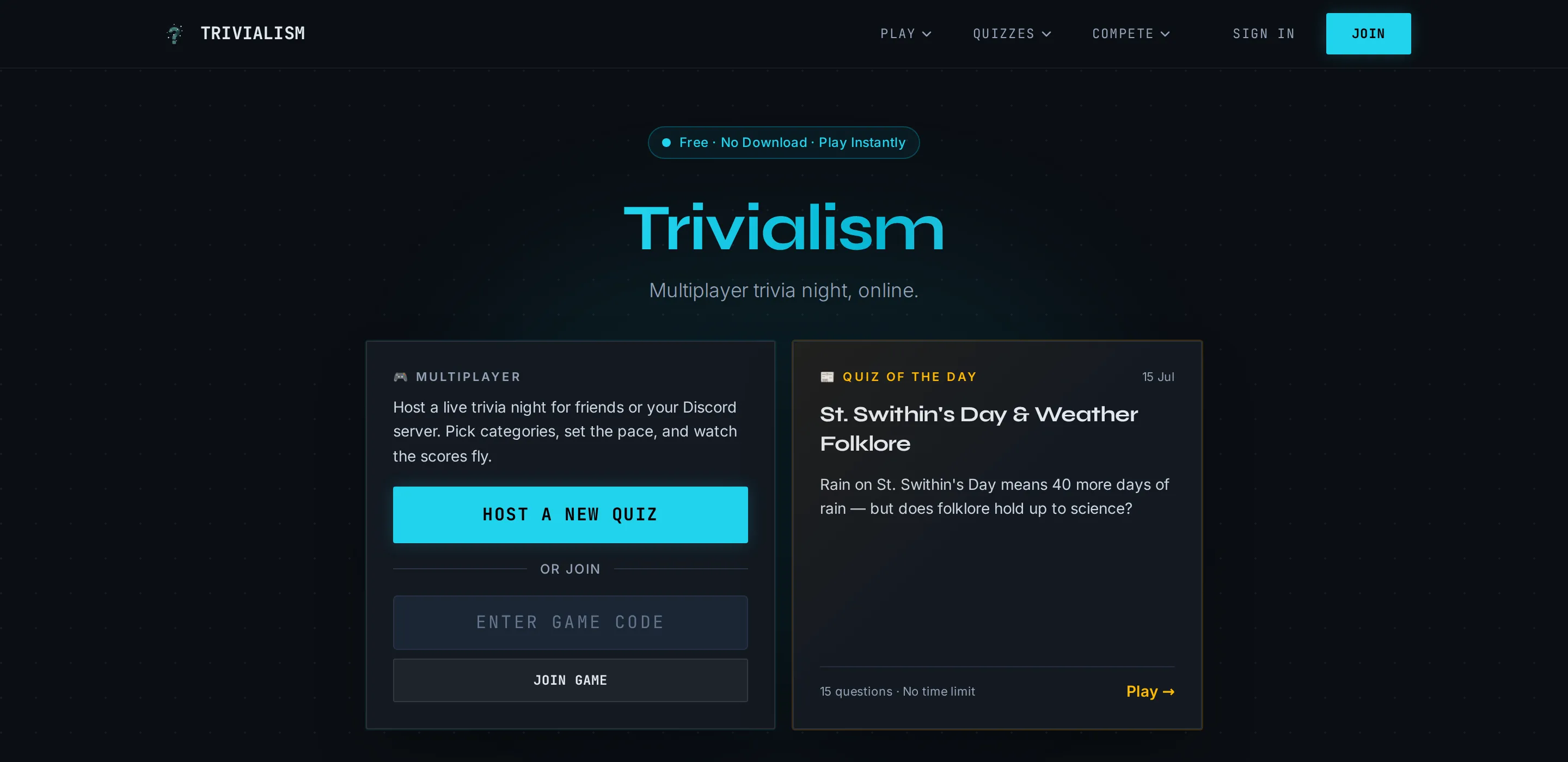
The Trivialism home page: a game-code entry field for joining a live quiz night, alongside the day's featured quiz on weather folklore.

On the live site today

  • 43,000+ questions
  • 80+ categories
  • 10 core topics
  • Play in-browser, on mobile, or inside Discord
OSINT Tracker

personal

A live 3D globe rendering 70 toggleable, time-scrubbable layers of free public data.

Seventy upstream layers — each with its own format, cadence, and idea of time — normalised onto a single clock, so the whole globe rewinds together. Satellites are propagated with SGP4 rather than replayed, which means scrubbing backwards gives you real orbital positions rather than a recording of them. Sixteen thousand of them, at a hundred-plus frames a second, in a browser.

  • Cesium
  • WebSockets
  • SGP4 propagation
  • TypeScript
Open the globe
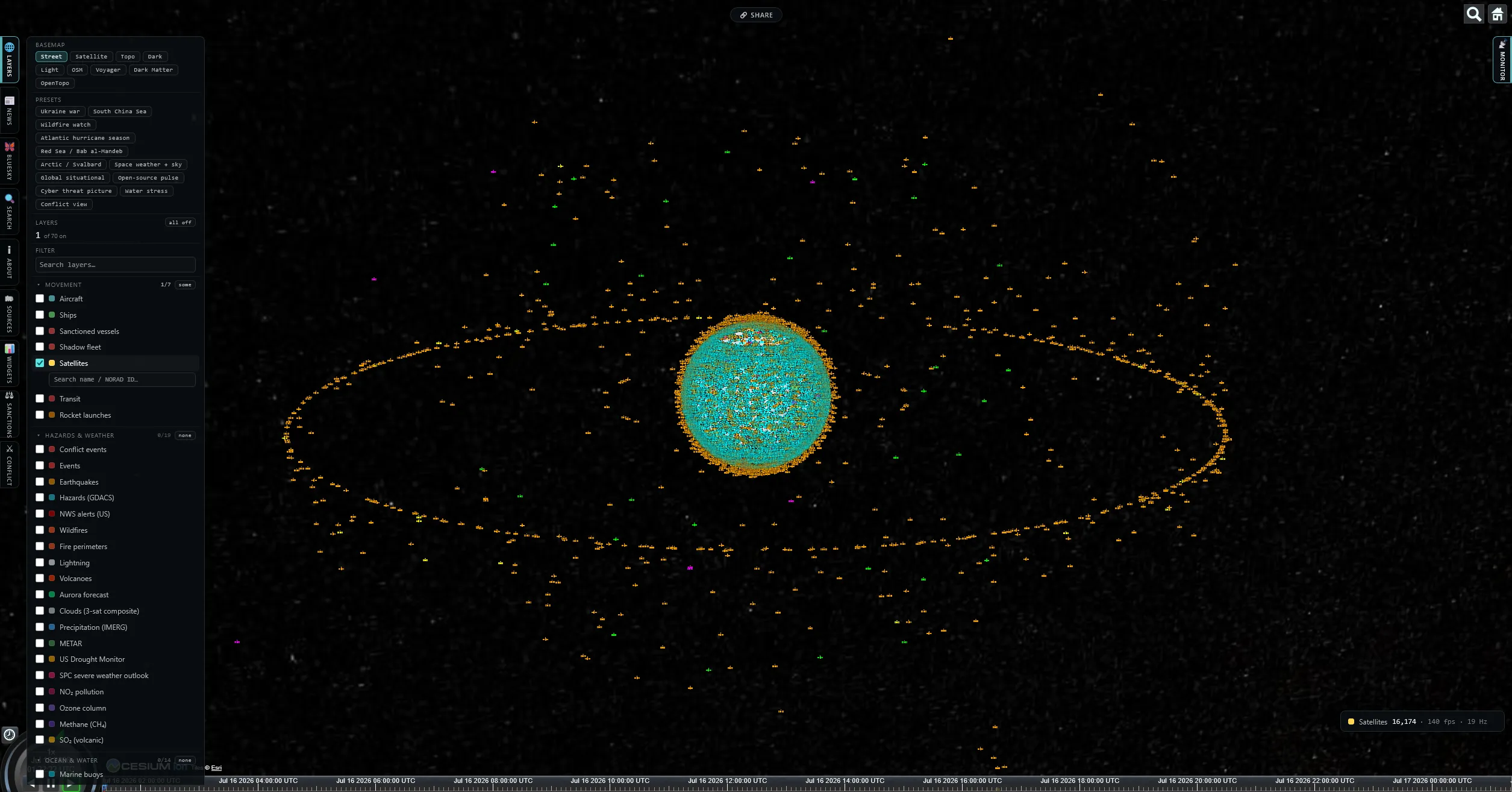
The OSINT Tracker globe with the satellite layer on: sixteen thousand satellites swarming the earth in orbital bands, with the layer panel and a scrubbable timeline running along the bottom.

On the live globe right now

  • 70 toggleable layers
  • 16,000+ satellites
  • Every layer rewinds with the clock
  • All from free public feeds

Drop-in logs, traces, and metrics for every Docker Compose project on a host.

A project opts in by joining a Docker network and adding a few container labels. That's the whole integration — no collector config, no SDK wiring, no observability code in the project repo. All the plumbing lives on the host, so a new service gets logs, traces, and metrics in about a minute without knowing the stack exists.

  • OpenTelemetry
  • Loki
  • Jaeger
  • Prometheus
  • Grafana

What it's watching

  • Logs
  • Traces
  • Metrics
  • Container health
  • Four labels to opt in

Gratitude

In progress

A gratitude journal you share as narrowly as you like, pinned to a map only you can see.

Location is owner-only by construction, not by remembering to hide it. A post's coordinates live in a separate table the feed never joins, behind a row-level policy with no "friends" branch at all, and get stripped from photos on upload — so a friend's view of a geotagged post doesn't carry the location as null, it carries it not at all. Even the map is self-hosted down to the last tile: one request to someone else's tile server, on a map centred on your own pins, would already have said "this person lives here."

  • Next.js 16
  • TypeScript
  • Supabase (Postgres + RLS)
  • MapLibre + pmtiles
  • sharp
Open Gratitude

Got something interesting to build?

The door's open, and the roster is short. Right now there's one person behind all of this, which is exactly why there's room.

See who you'd be building with